

Tabla de contenido
Most of the time, running is a pleasurable activity, but on certain occasions, we feel discomfort associated with this sporting activity. Some of the most commented by our readers are:
1.- Cramps
Cramps are the annoying sensation of involuntary contraction of any muscle group subjected to physical work. To avoid cramps, you should improve your muscle strength and flexibility and prevent dehydration and electrolyte alteration by ingesting enough food and fluids for exercise. Avoiding a potassium, magnesium, and calcium deficit in your diet is also essential.
2.- Side stitches
known in English as side stitches, this is a prevalent complaint among runners. Although it is not known exactly why they occur, there are known measures that can be taken to prevent and treat them. These include improving breathing, maintaining posture, avoiding heavy or high-fat foods before running, and starting the training routine with a short warm-up beforehand.

3.- Dry mouth
We have all experienced the unpleasant sensation of having a dry mouth during a training session or race. This is quite recurrent for some runners, who wonder why it happens so often. The first reason why we can have a dry mouth while running can be pretty simple: dehydration and the second one is quite obvious: not running excessively while breathing. In conclusion, to avoid dry mouth, we must hydrate and take care of our breathing.
4.-Knee pain
This is one of the most feared discomforts for runners. The first recommendation is to visit your doctor because there may be multiple causes of this discomfort. Still, we can advance that you should work on flexibility, balance, and strength to help prevent joint injuries.
5.- Pain in the sole
Plantar fasciitis is one of the injuries that occur most frequently in runners, whether amateur or professional, and it is nothing more than the inflammation of the plantar fascia, a band of tissue that connects the heel to the toes and supports the arch of the foot, which is caused by overloading this ligament.
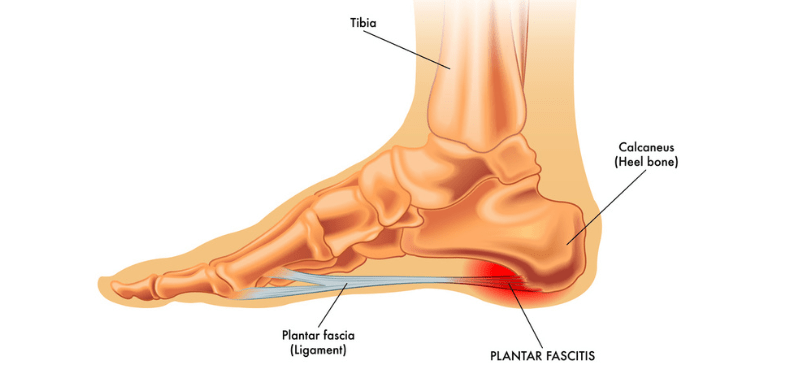
Thus, small tears can occur in the fascia by subjecting the tissue to repetitive stress, producing inflammation and pain. Using inadequate shoes for your type of tread or body weight condition, using worn-out shoes, not stretching before and after training and races, and increasing mileage suddenly or abruptly.
6.- Stiffness
An intense leg pain results in the sensation of inability to move. This is what we know as an episode of muscle soreness. In the short term, muscle soreness leaves its consequences: increased muscle tension, inflammation, joint stiffness, and difficulty in stretching. They are ubiquitous in weekend runners who do no physical activity Monday through Friday and, on Saturday and Sunday, want to compensate for their inactivity by overloading their muscles. Recommendation: perform planned, incremental training. If your pain lasts more than five days and is not relieved by rest or activity, consult a specialist.
7.- Choking when running
Another of the most common problems associated with poor breathing. The solution: be focused on how we breathe and how often we inhale and exhale.
8.- Gastrointestinal problems
One of the most unpleasant and even embarrassing discomforts of the runner. One of the best ways to avoid these stomach discomforts is to rehearse our nutritional plan during training, including what we will eat for breakfast before the race and what we will consume during the race (gels and water). Avoid consuming high-fiber foods the morning of the race or even the day before, and take care of your hydration.
We hope that some of our recommendations will be useful and make running an activity without discomfort.
Photos: Depositphoto

Looking for a plan that trains with you, not against you?
At running.COACH, we don’t just build a schedule. We create a smart, living plan that evolves with you. It understands your level, your race goals and your real life. Whether you sync your GPS watch or train straight from our iOS or Android app, your plan adjusts automatically as you improve.
From day one, you’ll feel the difference:
- A fully personalized, dynamic plan designed for you.
- Automatic sync and effortless workout tracking.
- Real-time updates when life happens, including missed sessions, new races or schedule changes.
- Simple, science-backed guidance to train smarter and recover faster.
🎁 Start today and enjoy your first 30 days free.
Because the best training plan isn’t one you follow. It’s one that follows you.app.










0 Comments