

Tabla de contenido
Many people wonder if, when they reach a certain age, they can maintain the physical activity they had been doing up to that moment. While it is true that age does not represent an impediment to performing physical activities such as running and cycling, among others, those who perform the activities must take into account specific recommendations that will help them stay away from injuries and discomfort that may develop due to overuse and whose risk increases with age.
Jeff Galloway, Olympic runner, creator of the Run-Walk-Run Training Method, and author of more than 19 books on running, devotes some space on his blog to give some recommendations to runners over 40. We share some of these with you:
1.- Avoid overuse of muscles, tendons, and joints
The best way to avoid aches and pains that can arise from running is to avoid overusing the muscles and joints involved in the activity. According to Galloway, after the age of 40, the time it takes for our legs to recover is longer. Therefore, he suggests increasing rest days between running days or incorporating more walking breaks into the training session. Galloway provides this guide to what are recommended training days based on a runner’s age:
35 and under, no more than five days per week.
36-45: no more than four days a week of exercise.
46-59: exercise every other day.
60+: 3 days per week
70+: 2 days of hard sessions and another with a more extended but gentle session
80+: One long session, one short session, and one light low-impact session.

Divide sessions into segments to reduce aches and pains
According to Galloway, it is common for runners to feel that they get more out of their training sessions if they do one in the morning and another in the afternoon/evening, thus reducing the risk of developing aches and pains in their muscles or joints. Thus, he recommends, for example, that instead of running 30 minutes, you divide it into three 10-minute segments with 5 minutes of recovery between each segment.
Warm up for longer
“As we age, it takes longer for our muscles to adapt to the level of exertion required for the training session,” explains Galloway. He recommends that the ideal is to start the warm-up with a gentle walk for 3 minutes and start the run gradually.
Avoid maximum effort
Running at maximum exertion can make you prone to developing injuries. With each passing decade, the time it takes for the body to recover from a hard session becomes longer.
While it’s true that many runners in their 40s and 50s can do the same speed work they did in their 20s and 30s, the cost of those sessions is often more significant, and the fatigue or tiredness lingers longer, leading to the development of overuse injuries.

Manage injuries by taking immediate action
According to Galloway, the most crucial reason runners improve, especially older runners, is because they stay injury-free and avoid accumulating fatigue during training sessions.
They achieve this by striking the right balance between stress and rest. “It’s crucial to be conservative,” comments Galloway. He suggests that, at the first signs of possible injury or fatigue, take a 3-day rest and treat the area where the discomfort is. “If you feel more fatigue, increase the rest time, decrease the length of the training session, or increase the number of weekly sessions,” he concludes.
Use a personalized training plan
Adapting the standard training plans available on the Internet is necessary after the age of 40.
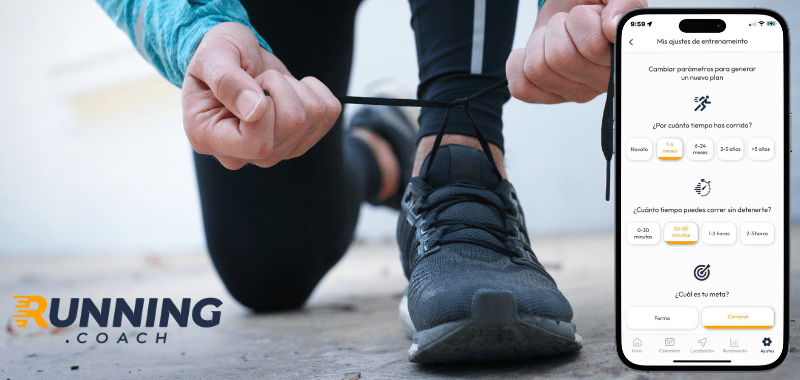
You can do it with the tips we have given you in this article but if you want a 100% personal plan we recommend you use our running.COACH app

Looking for a plan that trains with you, not against you?
At running.COACH, we don’t just build a schedule. We create a smart, living plan that evolves with you. It understands your level, your race goals and your real life. Whether you sync your GPS watch or train straight from our iOS or Android app, your plan adjusts automatically as you improve.
From day one, you’ll feel the difference:
- A fully personalized, dynamic plan designed for you.
- Automatic sync and effortless workout tracking.
- Real-time updates when life happens, including missed sessions, new races or schedule changes.
- Simple, science-backed guidance to train smarter and recover faster.
🎁 Start today and enjoy your first 30 days free.
Because the best training plan isn’t one you follow. It’s one that follows you.app.










0 Comments